
17.07.2026
How to conduct a strategic review of a company when results are growing but the direction is questionable?
Key information:
- Dynamiczny wzrost i doskonałe wyniki finansowe mogą zmniejszyć czujność liderów, odwracając uwagę od głębokich problemów strategicznych zachodzących wewnątrz organizacji.
- Sustainable competitive advantage requires continuous market monitoring, setting strategic goals, and verifying whether the company's previously developed development strategy has become obsolete.
- Artykuł opisuje proces tworzenia planu strategicznego krok po kroku, narzędzia takie jak analiza SWOT czy analiza PEST, a także metody portfolio, które pozwalają obiektywnie ocenić kierunek rozwoju organizacji.
- Zrozumienie różnicy między wskaźnikami historycznymi a przyszłymi trendami chroni przedsiębiorstwo przed utratą wypracowanej pozycji.
Details below!

Strategia firmy – z czego się składa?
To create a reliable strategic report, several interlocking elements must be precisely combined. A well-thought-out company strategy to spójna konstrukcja – brak któregokolwiek z tych elementów może significantly limit the effectiveness of the plan or threaten its realization w obliczu pierwszych wyzwań rynkowych.
Complete Company strategy template powinien składać się z następujących komponentów:
- Misja i wizja (Fundament): Misja odpowiada na pytanie, po co firma istnieje i jaką wartość wnosi dla klientów. Wizja z kolei to obraz organizacji w przyszłości – cel, do którego dążysz (np. za 5 lub 10 lat).
- Company Strategic Goals (Direction): To mierzalne, precyzyjnie określone kamienie milowe (zgodne z metodologią SMART), które organizacja chce osiągnąć. To tutaj zapada decyzja, jaki organization's development direction you choose.
- Output Analysis (Context): Previously mentioned Comprehensive strategic analysis (zarówno wewnętrzna, jak i zewnętrzna), która określa punkt startowy i pozwala realnie ocenić zasoby oraz zagrożenia.
- Competitive Advantage (Uniqueness): Sercem każdej strategii jest jasne zdefiniowanie, dlaczego klient ma wybrać właśnie Ciebie, a nie ofertę konkurencji. Może to być unikalna technologia, wyjątkowa obsługa czy innowacyjny model subskrypcyjny.
- Plan działania i alokacja zasobów (Egzekucja): Translating theory into practice. It defines what budgets, tools, and human resources will be needed in order to strategy implementation była w ogóle możliwa.
- Performance Indicators (Control): Set key metrics (KPI) that allow for regular measure the effectiveness of a strategy i w porę reagować, gdy organizacja zaczyna zbaczać z obranego kursu.
Czym jest przegląd strategiczny w fazie wzrostu?
Many managers believe that strategy creation to proces jednorazowy, uruchamiany wyłącznie w momentach kryzysu. To błąd. W fazie dynamicznego skalowania biznesu, regularny przegląd staje się kluczowym elementem zarządzania. To systematyczna, Comprehensive strategic analysis, whose purpose is to verify whether the current Business strategy of the company Nadal responds to market realities.
Wdrażanie strategii biznesowej firmy w okresie wzrostu różni się od działań naprawczych. Zamiast gasić pożary, organizacja musi skupić się na antycypacji zmian. Przegląd strategiczny weryfikuje, czy Business development plan uwzględnia nasycenie rynku, rosnące oczekiwania klientów oraz ruchy ze strony rywali. Pozwala odpowiedzieć na pytanie, czy plan rozwoju firmy wyznaczony na początkowym etapie jest wciąż aktualny i czy posiadana competitive advantage it does not begin to erode under the influence of new technologies or the debuts of other entities.
Why might excellent financial results mask strategic problems?
Wysoka rentowność, rosnące przychody i świetna płynność to marzenie każdego przedsiębiorcy. Paradoksalnie, to właśnie one stanowią największe źródło samozadowolenia, które rodzi najpoważniejsze Strategy creation errors. Kiedy cyfry w arkuszach się zgadzają, zarządy rzadko decydują się na to, by głęboko analyze strategic potential to question existing methods of operation.
Wyniki finansowe są wskaźnikami opóźnionymi – pokazują efekty decyzji podjętych w przeszłości. W tym samym czasie wewnątrz organizacji mogą już pęcznieć poważne strategic problems. These include among others. hidden increase in operating costs, product attention diffusion, decrease in customer loyalty, or weakening of the unique value of the offering. Unthinking focus on profits leads to effective development strategy zamienia się w dryf, a firma nie zauważa, że traci stabilność.
What warning signs indicate the exhaustion of the current business model?
Zanim kryzys uwidoczni się w raportach księgowych, pojawiają się subtelne symptomy, które powinny skłonić menedżerów do działania. Pierwszym z nich jest sytuacja, w której Strategy implementation wymaga coraz większych nakładów finansowych i kadrowych, przy jednoczesnym generowaniu coraz mniejszych zwrotów (tzw. prawo malejących przychodów). Jeśli acquiring a new client It's becoming drastically more expensive, which is a clear sign the market is becoming saturated.
Other disturbing signs include:
- Increase in employee turnover w kluczowych działach odpowiedzialnych za innowacje.
- Aggressive competitor pricing, which forces the company into continuous margin concessions.
- Changes in consumer behavior, where the current flagship product is starting to be seen as outdated.
When The company's strategy allows na generowanie zysków już tylko dzięki dynamice rynku, a nie realnej innowacji jest to wyraźny sygnał ostrzegawaczy. Ignorowanie tych przesłanek to prosta droga do utraty dotychczasowej stabilności.
Strategic direction verification process
Proper evaluation requires a systematic approach. How can this process be carried out to bring real value? Company strategy step step by step should include the following steps:
- Inwentaryzacja i audyt stanu obecnego: Checking the current stage strategic plan and which Strategic company goals zostały zrealizowane, a które porzucono.
- Macroenvironmental research: It is used here PEST analysis, badająca czynniki polityczne, ekonomiczne, społeczne i technologiczne, które determinują przyszłość branży.
- Analyze the competitive environment: W tym miejscu niezbędny okazuje się Five Forces model Porter, pozwalający na obiektywną ocenę atrakcyjności sektora oraz barier wejścia i wyjścia.
- Internal synthesis: Classic SWOT analysis organizes strengths of the company, her Weaknesses, a także identyfikuje zewnętrzne szanse i zagrożenia.
- Product portfolio review: Using Portfolio methods (np. macierz BCG), ocenia się, które linie biznesowe finansują rozwój, a które stają się obciążeniem.
The effect of these actions should be strategic planning w nowej, zaktualizowanej wersji, która precyzyjnie określa organization's development direction for the coming years.

Jak wykorzystać wyniki analizy strategicznej w praktyce?
Samo zebranie danych i wypełnienie tabel to zaledwie połowa sukcesu. Prawdziwa wartość pojawia się wtedy, gdy Strategic analysis results opuszczają arkusze kalkulacyjne i zaczynają kształtować codzienną rzeczywistość biznesową. Wiele organizacji popełnia błąd, traktując ten proces jako działanie jednorazowe, podczas gdy powinien on stanowić punkt wyjścia do głębokiej transformacji operacyjnej.
Here's how to translate acquired knowledge into real business actions:
- Aktualizacja i redefinicja celów: Jeśli z analizy wynika, że rynek mocno się nasyca, dotychczasowy Sales plan nie może pozostać bez zmian. Wyniki powinny posłużyć do weryfikacji założeń i wyznaczenia nowych, bardziej adekwatnych strategic goals – na przykład przesunięcia ciężaru z agresywnego pozyskiwaniai nowych klientów na zwiększanie lojalności obecnych (retencja).
- Marketing plan revision: Understanding your current competitive position pozwala bardziej precyzyjnie targetować działania promocyjne. Jeśli analiza PEST wskazała na gwałtowny wzrost znaczenia nowych kanałów cyfrowych, to jasny sygnał do natychmiastowej modyfikacji budżetów i założeń marketing plan.
- Alokacja zasobów i kapitału: Portfolio Methods dają jasną odpowiedź na pytanie, które projekty generują realne zyski, a które są jedynie „wizerunkowym obciążeniem”. Praktyczne wykorzystanie analizy polega na odważnym ucięciu budżetów dla nierentownych odnóg biznesu i przetransferowaniu tych środków na rozwój innowacji, które mają szansę zbudować przyszłą competitive advantage.
- Introduction of an early warning system: Wykryte w trakcie analizy Weaknesses oraz zagrożenia rynkowe należy opisać za pomocą mierzalnych wskaźników. Jeśli kluczowym ryzykiem jest utrata płynności z powodu zatorów płatniczych, należy wprowadzić do dashboardu zarządczego performance indicators (KPI) monitorujące spływ należności w ujęciu tygodniowym, a nie kwartalnym.
Jak obiektywnie analizować pozycję rynkową i unikać pułapki wskaźników historycznych?
Tradycyjne podejście do analityki biznesowej często opiera się na analizie danych z minionych kwartałów. Aby jednak budować future strategies, leaders must change their perspective. Market analysis and competition analysis must be based on leading indicators, such as Customer satisfaction (NPS), user engagement or time New product launches (Time-to-Market).
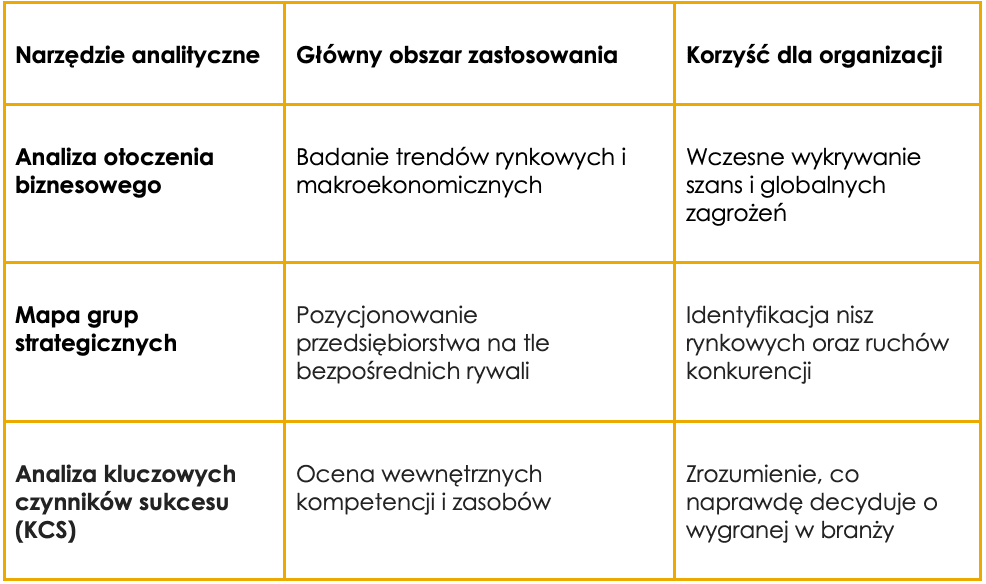
The right approach allows you to precisely determine the current competitive position przedsiębiorstwa. Zamiast opierać się na intuicji, menedżerowie zyskują twarde dane pokazujące, w sposób przejrzysty Strategic analysis results. This makes it easier to assess whether you have strategic position It's stable, or does it require reinforcement.
Is your organization ready to change course despite the ongoing period of growth?
Zdolność do zmiany w momencie, gdy wszystko działa bez zarzutu, to najwyższa forma dojrzałości biznesowej. Wymaga ona jednak przełamania oporów wewnętrznych. Ludzie naturalnie dążą do stabilizacji – jeśli zespół widzi świetne wyniki, rzadko rozumie, dlaczego kierownictwo inicjuje strategic planning process od nowa i modyfikuje dotychczasowy Action plan.
Readiness for transformation depends on organizational culture. It is crucial that Strategic goal setting and their subsequent modification was a transparent process. Management must be able to communicate to employees why update business strategy należy właśnie teraz, kiedy firma ma zasoby i kapitał na eksperymenty, a nie wtedy, gdy spadek przychodów wymusi Nerve-wracking cost-cutting. Clear steps are needed to verify progress. performance indicators Key Performance Indicator, which will allow objectively measure the effectiveness of a strategy at every stage of its implementation.
Strategic vigilance as the foundation of sustainable competitive advantage
W dzisiejszym, zmiennym środowisku biznesowym stała czujność nie jest opcją – to warunek przetrwania. Firmy, które odniosły sukces, często upadały nie dlatego, że robiły rzeczy źle, ale dlatego, że robiły właściwe rzeczy zbyt długo, ignorując zmieniający się świat. The Success of the Development Strategy zależy od elastyczności i odwagi do ciągłego podważania status quo.
Nie chodzi o to, by co miesiąc zmieniać Direction of development i porzucać wyznaczone cele. Sztuka polega na zachowaniu balansu pomiędzy długoterminową wizją a zwrotnością operacyjną. Kiedy comprehensive development strategy łączy się z regularną weryfikacją założeń, organizacja zyskuje unikalną odporność na wstrząsy. Taka postawa pozwala nie tylko utrzymać pozycję lidera, ale przede wszystkim samodzielnie kształtować reguły gry w swoim sektorze.
Implementing the company strategy step by step
Nawet najbardziej błyskotliwa i poparta twardymi danymi koncepcja jest bezwartościowa, jeśli pozostanie jedynie zapisem w dokumencie. Statystyki biznesowe są nieubłagane – większość planów upada nie z powodu błędnej teorii, ale przez nieefektywne wykonanie. Implementing the company strategy to długofalowy proces zarządzania zmianą, który wymaga żelaznej dyscypliny i zaangażowania na każdym szczeblu organizacji.
How to conduct this process effectively? Here is a proven step-by-step guide:
Mapowanie celów i transparentna komunikacja
The first mistake after completing work on the strategy is to put it away in the executive drawer. Effective company strategy musi być zrozumiana przez każdego pracownika. Proces ten polega na przełożeniu ogólnych celów korporacyjnych na cele konkretnych działów (np. marketingu, sprzedaży, HR), a następnie na indywidualne zadania dla zespołów. Każdy w organizacji musi wiedzieć, jak jego codzienna praca wpływa na organization's development direction.

Alokacja zasobów i budżetowanie
Strategia bez budżetu to tylko intencja. W tym kroku należy zweryfikować, czy Action plan posiada odpowiednie zaplecze finansowe, technologiczne i ludzkie. Często oznacza to konieczność rezygnacji ze starych, nierentownych projektów na rzecz dofinansowania nowych inicjatyw, które mają zbudować przyszłą competitive advantage.
Wyznaczenie ról i odpowiedzialności
Rozmyta odpowiedzialność to gwarancja porażki. Każdy projekt i cel strategiczny musi mieć swojego „właściciela”. To konkretna osoba w firmie, która odpowiada za terminowość prac i raportuje postępy. Do ułożenia struktury warto wykorzystać np. RACI matrix, która jasno definiuje, kto za co odpowiada, a kto pełni rolę doradczą.
Implementation of an operationalization system (e.g., OKRs)
Aby strategy implementation nie rozmyła się w natłoku bieżących, codziennych obowiązków), należy wdrożyć system zarządzania przez cele, np. OKR (Objectives and Key ResultsIt allows you to link long-term Strategic company goals z krótkimi, zazwyczaj kwartalnymi cyklami operacyjnymi, na które pracownicy mają realny wpływ.
Bieżący monitoring i wskaźniki efektywności
Nie możesz zarządzać czymś, czego nie mierzysz. Na tym etapie kluczowe jest regularne (np. raz w miesiącu) sprawdzanie postępów. Służą do tego precyzyjnie dobrane performance indicators. A management dashboard should show in real time whether the organization is on track to meet its goal or if there are any delays.
Cykliczny przegląd i gotowość na korektę kursu
The business world is changing too quickly to stick to a plan uncritically. Once a quarter or every six months, it's necessary to assess whether the initial assumptions are still valid. If environmental analysis If new threats or unexpected moves by competitors emerge, managers must have the courage to update business strategy on an ongoing basis, adapting it to market realities.
Elastyczność w działaniu jako klucz do jutra
Zrozumienie mechanizmów rządzących rynkiem i odwaga do adaptacji to cechy wyróżniające wybitne organizacje. Każda dojrzała Action strategy musi zakładać dywersyfikację scenariuszy rozwoju i gotowość na redefinicję priorytetów. Regularna Strategic business analysis, unikanie dogmatyzmu oraz otwartość na sygnały płynące z otoczenia pozwalają uniknąć stagnacji. Budowanie biznesu odpornego na upływ czasu to nie kwestia znalezienia jednej, idealnej formuły sukcesu, lecz nieustanny proces uczenia się i dopasowywania struktur do nowych wyzwań. Ostatecznie wygrywają ci, dla których long-term company development jest ważniejszy niż chwilowy spokój i bieżąca strefa komfortu.
Kinga Makara
See other entries