
10.08.2022
How do natural disasters affect the economy?
Highlights:
- In 2020, there were 389 natural disasters that killed 15,080 people and injured more than 38 million, economic losses in 2020 were estimated at $171 billion.
- Natural disasters can be divided into geophysical, meteorological, hydrological, climatic, biological and extraterritorial.
- Countries with higher catastrophic risk lose the most, as such regions can experience up to dozens of such events per year.
- Indirect effects include reductions in production, investment, migration and preventive measures by the public.
- Short-term, direct effects of natural disasters always negatively affect the economy.
- Climate disasters have a negative impact on GDP growth dynamics, especially in less developed countries.
- Hurricanes negatively affect agriculture, manufacturing and tourism, but positively affect construction.
- The long-term effects of natural disasters reduce the rate of economic growth.
- Reducing the human impact on the environment and proper preparations by governments can minimize the negative economic impact of disasters.
Details below!
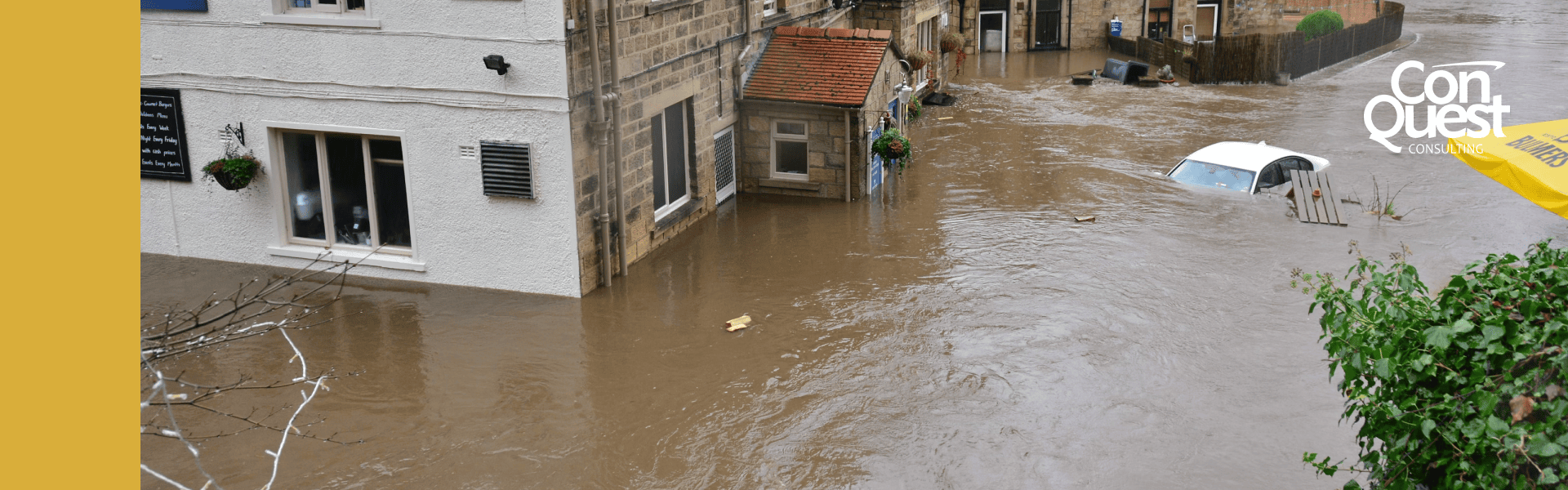
Natural disasters have been occurring since time immemorial, but in recent years there have been far more of them, and the losses caused by them are being felt by an increasing number of people and businesses. The reason for this may be harmful human interference with the environment, causing climate change. According to a report by The International Disaster Database (EM-DAT), in 2020 alone there were 389 events classified as natural disasters, which killed 15,080 people and injured more than 38 million. In addition to human tragedies, disasters also have negative effects on the economy. In the aforementioned report, economic losses
in 2020 were estimated at $171 billion.
On what does the amount of economic losses caused by natural disasters depend?
According to the EM-DAT classification, natural disasters can be divided into several categories: geophysical (earthquakes, mass movements, volcanic eruptions), meteorological (extreme temperatures, storms, hurricanes), hydrological (floods, snow avalanches), climate (droughts, forest fires), biological (epidemics, plagues) and extraterritorial (meteorite impacts). Depending on which one we are dealing with and on what scale it occurs, the strength of its effect can vary. The impact on different sectors of the economy may also be different. A massive earthquake, for example, will have a much more tragic effect, and the process of rebuilding infrastructure may take much longer and consume more resources than in the case of a small flood.
Also of great importance is the region in which the disaster takes place. Countries that frequently experience such events can partially mitigate their negative effects because they are better prepared for them than countries for which natural disasters are rare. However, despite this, it is the countries with higher catastrophic risk that lose the most, due to the fact that such regions can experience up to dozens of such events each year, and it is usually these areas that experience the most severe and tragic disasters.
While the loss of human and physical capital affects only the region where the disaster occurred, due to increasing globalization, the economic effects are often also felt in the country's closest partners. In contrast, when a large country such as the United States is affected, the economic effects can be global.
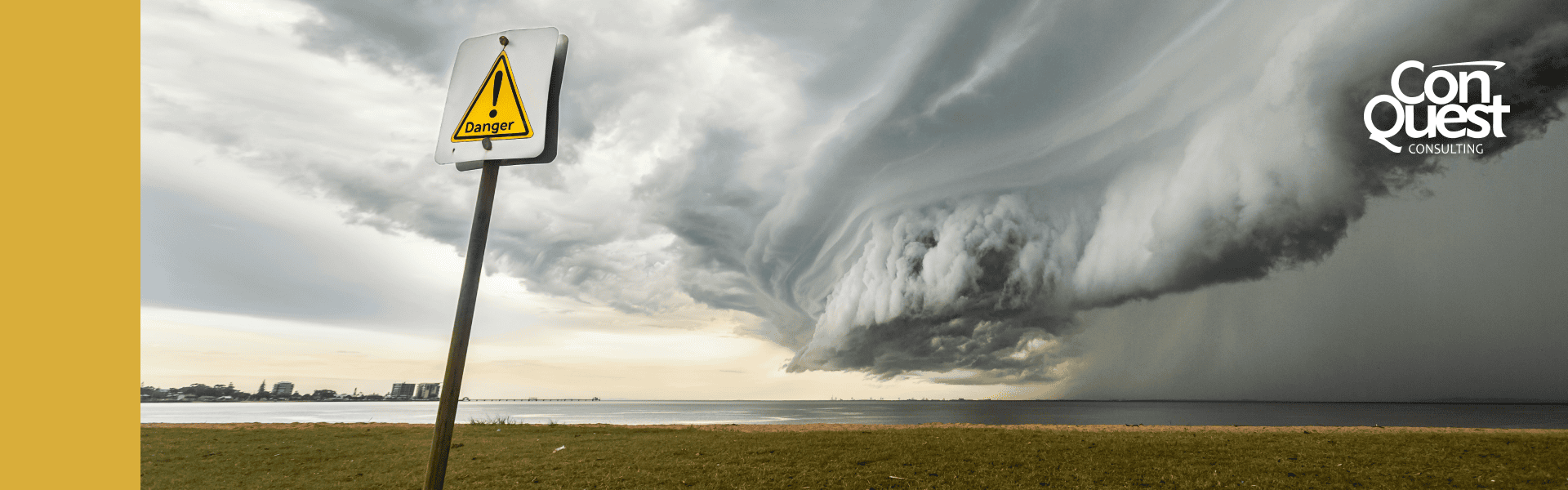
Direct and indirect effects of natural disasters
The aforementioned losses in human capital, i.e. deaths, physical and psychological injuries, as well as in physical capital - destruction of infrastructure, fixed assets and raw materials, are direct effects of disasters, which in turn cause a number of indirect effects. These, in turn, can include a reduction in the production of goods and services, a reduction in investment, migration, and precautionary measures by society (such as an increase in savings), among others. All these factors, caused by a negative supply shock such as the occurrence of a natural disaster, can consequently cause an economic slowdown.
The direct effects of natural disasters should be classified as short-term effects. Their measurability is much easier than the indirect ones. After a disaster occurs, studies are usually conducted to estimate material losses. It is more complicated to estimate indirect, long-term effects. These, in turn, can be measured by analyzing changes in the GDP index, the economic activity index, the real household consumption index, the consumer price index, the affected country's share of global exports and imports, the national currency exchange rate, national stock market indices, the unemployment rate or the number of company bankruptcies in the affected country, among others.
However, it should be borne in mind that the observed changes in all the indicators mentioned above, will not be caused only by a negative supply shock caused by a natural disaster. The economy is simultaneously affected by many other factors, and it is difficult to isolate the effect of only one of them. Therefore, special macroeconomic models are used to predict and estimate the strength of the long-term effects caused by a natural disaster.
All of the previously cited effects negatively affect the economy, and it cannot be denied that they are the vast majority. However, it is also necessary to mention the few positive indirect effects that may also occur. With potential financial assistance from abroad or by using one's own resources, it is possible to reconstruct the destroyed region. Typically, the reconstructed infrastructure is more resistant to renewed attacks from the elements. In addition, it is possible to upgrade it and introduce better technologies. Therefore, the effect of reconstruction will be greater productivity in the future, which is undoubtedly a positive effect for the economy.
Results of empirical studies of the impact of natural disasters on the economy
Economists have been studying the impact of all kinds of natural disasters on the economy for years. The main conclusion from direct effects research is very intuitive: the short-term, direct effects of natural disasters always negatively affect the economy. It is also not surprising that relatively greater material losses are incurred by more developed countries, where more expensive buildings and fixed assets can be destroyed, and that these costs increase over time, which can also be explained by increasingly expensive infrastructure. Researchers also mostly agree with the correlation that in richer countries, natural disasters cause fewer deaths. However, there are doubts about the linearity of this relationship.
The results of the indirect effects studies are much more interesting. Climate disasters definitely have a negative impact on GDP growth dynamics, However, the strength of the effect is not always directly proportional to the scale of the cataclysm, and the relationship is non-linear. In addition, economic downturns are felt more in less developed countries. Studies of the impact of extreme meteorological events, such as hurricanes, show that they do not have a negative impact on all industries. Sectors such as agriculture, manufacturing and tourism are mainly affected. In contrast, companies in the construction industry are positively affected, mainly due to the need to rebuild damaged infrastructure. This confirms the earlier thesis about the possible, albeit few, positive effects of natural disasters. To even more interesting conclusions, came economists (Leiter, Oberhofer and Raschky) studying the consequences of floods in Europe. Well, it turns out that in many cases in the regions affected by the floods, employment increased and greater capital accumulation was observed, while productivity did not change significantly. Therefore, it can be assumed that in order to maintain productivity at pre-flood levels, companies had to increase investment and employment.
There is little research in the context of the long-term effects of natural disasters, mainly due to data problems and the difficulty of isolating the impact of a single factor on a given indicator over a dozen-or-so years. However, those that do exist show that disasters also reduce economic growth rates in the years following the year of the event.

What can we do to offset the effects of natural disasters?
Natural disasters definitely have a negative effect on the economy of the country where they occur, and through increasing globalization, this effect is also spreading to other countries. This is why it is so important to reduce the harmful effects of humans on the environment. To some extent, man-made climate change contributes in part to avoidable natural disasters. In addition, governments of countries that are particularly vulnerable to such phenomena should strive to minimize negative economic impacts through appropriate early preparations.
Jakub Nowakowski
See other entries