
06.08.2026
How to think long-term under the pressure of quarterly goals?
Key information
- Long-term goals allow organizations to maintain a consistent direction of development despite the pressure of current results.
- Wiele firm koncentruje się na realizacji krótkoterminowych zadań, tracąc z oczu strategiczne cele biznesowe i cele strategiczne.
- Skuteczne wyznaczanie celów wymaga połączenia codziennych działań operacyjnych z wizją rozwoju przedsiębiorstwa.
- Planowanie w perspektywie wieloletniej pomaga podejmować lepsze decyzje nawet w warunkach dużej niepewności.
- Organizacje, które regularnie określają priorytety rozwojowe i monitorują ich realizację, są bardziej odporne na zmiany rynkowe i kryzysy.
Details below!
W świecie biznesu zdominowanym przez kwartalne raporty, wyniki sprzedażowe i bieżące wskaźniki efektywności It is increasingly difficult to maintain a perspective that goes beyond the coming months. Zarządy i menedżerowie każdego dnia mierzą się z wyzwaniem pogodzenia bieżących potrzeb organizacji z development plans covering a multi-year horizon.
Jednocześnie właśnie w takich warunkach szczególnego znaczenia nabierają cele długoterminowe. To one set the direction for the company's operations, They help set priorities and enable decisions that support the organization's future growth. Without them, even the most successful company może z czasem utracić swoją pozycję rynkową.
Jak zatem zachować równowagę między realizacją kwartalnych celów a budowaniem trwałej przewagi konkurencyjnej? Odpowiedź kryje się w umiejętnym połączeniu perspektywy operacyjnej i strategicznej.

Dlaczego organizacje i jednostki wpadają w pułapkę „gaszenia pożarów”
More than 60% organizations deklaruje, że posiada jasno określone cele długoterminowe. W praktyce jednak codzienność biznesowa często wygląda zupełnie inaczej. Pojawiające się problemy klientów, opóźnienia projektowe, presja sprzedażowa czy nieoczekiwane zmiany rynkowe sprawiają, że uwaga zespołów koncentruje się przede wszystkim na działaniach krótkoterminowych.
This phenomenon isn’t limited to businesses. People planning their professional or personal development operate in a similar way. Although they have ambitious life or career goals, they often devote most of their energy to responding to day-to-day challenges.
W rezultacie organizacje zaczynają realizować przede wszystkim cele krótkoterminowe, odkładając na później działania związane z rozwojem. Problem polega na tym, że Ambitious strategic goals do not achieve themselves on their own. If a company focuses exclusively on short-term results for an extended period, it may lose its ability to continue growing.
The Most Common Causes In such a situation, the following applies:
- the lack of clearly defined priorities,
- insufficient goal setting at the strategic level,
- an imprecise definition of long-term goals,
- lack of accountability for achieving goals,
- focusing exclusively on current indicators.
It’s worth remembering that combining short-term goals with long-term strategy It is not a management tool. Stanowi jeden z fundamentów skutecznego rozwoju organizacji.
Dwa poziomy działania: operacyjny i strategiczny
To understand why it is so difficult to maintain a long-term perspective, it is helpful to distinguish between two levels of an organization’s operations.
The first one is operational level. Obejmuje on wszystkie działania związane z codziennym funkcjonowaniem przedsiębiorstwa. To tutaj realizowane są projekty, prowadzone sales activities, obsługiwani klienci i rozwiązywane są current issues.
The second level is strategic level. It is precisely on this basis that the company's objectives, development strategy, and most important long-term goals are created. These include, among others:
- entering new markets,
- new product development,
- increasing market share,
- construction competitive advantage,
- team competency development.
Problem pojawia się wtedy, gdy poziom operacyjny zaczyna całkowicie dominować nad strategicznym. W takiej sytuacji organizacja wykonuje ogromną liczbę działań, ale coraz trudniej odpowiedzieć na pytanie, czy rzeczywiście przybliżają one firmę do realizacji jej celów strategicznych.
It is worth noting that A similar relationship also occurs at the individual level. Osoby posiadające ambitne cele zawodowe często muszą równoważyć codzienne obowiązki z inwestowaniem czasu w rozwój kompetencji. Podobnie wygląda sytuacja osób realizujących wieloletnie cele edukacyjne czy cele rozwoju zawodowego.
W obu przypadkach kluczowe jest maintaining proportions między tym, co pilne, a tym, co naprawdę ważne.
Najczęstsze błędy w podejściu do problemów doraźnych
Jednym z największych zagrożeń dla realizacji celów jest decision-making solely through the lens of short-term effects.
Przykładowo firma może ograniczyć wydatki na rozwój produktu, aby poprawić wyniki kwartalne. Taka decyzja może przynieść szybkie korzyści finansowe, ale jednocześnie osłabić możliwości dalszego wzrostu. W efekcie organizacja oddala się od osiągnięcia celu, który wcześniej sama uznała za priorytetowy.
Do most common errors include:
- brak powiązania działań operacyjnych z celami strategicznymi,
- inadequate goal planning,
- ignoring milestones,
- lack of progress monitoring,
- focusing on the symptoms of problems rather than their causes.
Często spotykanym błędem jest również brak odpowiedzi na pytanie, jakie cele długoterminowe zapewniają organizacji największą wartość. Bez takiej wiedzy trudno ustalać priorytety i podejmować trafne decyzje.
W praktyce wiele przedsiębiorstw realizuje setki inicjatyw, które nie wspierają ani celów biznesowych, ani rozwoju organizacji. Powoduje to rozproszenie zasobów i utrudnia konsekwentne wdrażanie strategii rozwoju.
Co istotne, problem ten nie dotyczy wyłącznie firm. Osoby planujące rozwój osobisty również często mają trudność z ustaleniem priorytetów. Dotyczy to zarówno osób realizujących cele zdrowotne, cele edukacyjne, jak i cele związane z pasjami czy cele związane z networkingiem.
How to evaluate current problems using decision frameworks
Jednym z najskuteczniejszych sposobów ochrony myślenia o przyszłości organizacji jest stosowanie uporządkowanych ram decyzyjnych.
Before the organization takes action, It is worth answering a few questions:
- Does the problem affect the achievement of strategic goals?
- Does his solution bring the company closer to achieving the goal?
- Does the activity support the implementation of the adopted directions of development?
- Is the problem merely a symptom of a deeper challenge?
W tym miejscu szczególnie pomocna okazuje się SMART method. Cele SMART pozwalają określać cele długoterminowe w sposób konkretny, mierzalny i możliwy do monitorowania.
By utilizing the SMART goal framework, an organization can more easily assess whether a given action truly supports the company's growth.
Properly defined goal should be:
- specific,
- measurable,
- attainable,
- significant,
- osadzony w czasie.
Takie podejście znacząco ułatwia śledzenie celów oraz ocenę postępów. Jednocześnie pomaga wyznaczać cele przedsiębiorstwa w sposób spójny z przyjętą strategią.
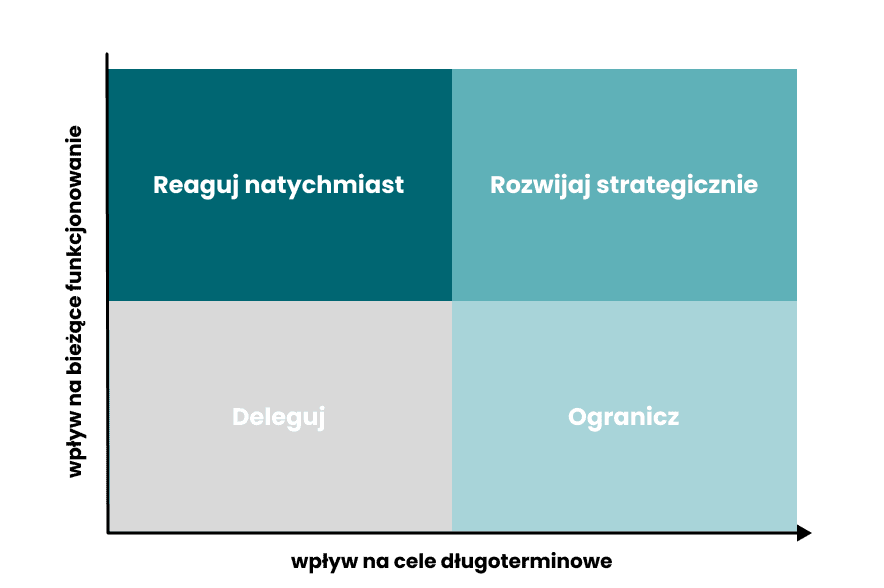
Przedstawiona macierz umożliwia klasyfikację problemów według ich wpływu na bieżące funkcjonowanie organizacji oraz realizację celów strategicznych. Dzięki temu menedżerowie mogą szybciej identyfikować kwestie wymagające natychmiastowej reakcji, odróżniając je od zagadnień, które powinny zostać rozwiązane w ramach działań długofalowych. Narzędzie wspiera efektywniejszą alokację zasobów oraz reduces risk excessive focus on operational problems at the expense of organizational development.
Wyznaczanie celów długoterminowych w praktyce
Many organizations declare that they have clearly defined goals, but significantly fewer companies are able to effectively translate them into daily operations. Samo wyznaczenie celów rozwojowych nie gwarantuje jeszcze sukcesu. Kluczowe znaczenie ma sposób, w jaki zostaną one wdrożone i zakomunikowane w organizacji.
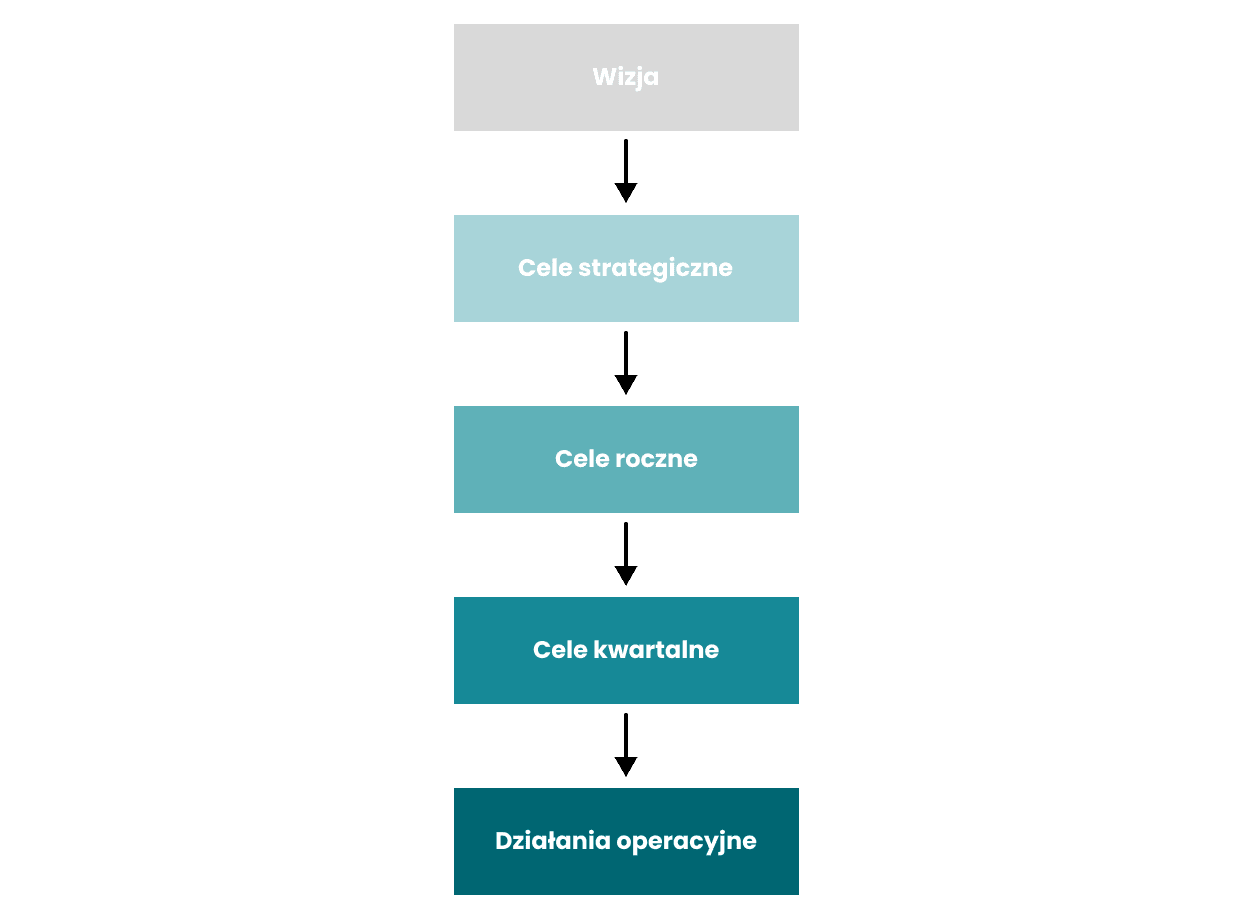
Effective long-term goal planning begins with business development directions. Then this direction should be translated into specific actions that can be implemented by individual teams.
The goal-setting process should take into account both the organization's ambitions and market realities. Zbyt zachowawcze cele nie będą napędzać rozwoju, natomiast zbyt ambitne mogą prowadzić do frustracji i spadku zaangażowania.
W praktyce wyznaczanie celów długoterminowych warto oprzeć na kilku zasadach:
- Goals should stem from the enterprise development strategy,
- success metrics should be defined, such as KPI (Key Performance Indicators) enabling the monitoring of the degree of achievement of the set goals,
- It is necessary to establish milestones,
- the organization should regularly monitor progress,
- Employees must understand the importance of individual actions.
Proper goal setting makes codzienne decyzje są bardziej spójne z kierunkiem rozwoju firmy. Thanks to this, they translate more easily into measurable business results.
Przykłady celów długoterminowych w biznesie i karierze
Jednym z najczęściej zadawanych pytań podczas planowania rozwoju jest to, jak powinny wyglądać przykłady celów długoterminowych. Warto pamiętać, że różnią się one w zależności od obszaru działalności and the stage of organizational development.
Examples of long-term business goals may include:
- wejście na nowy rynek zagraniczny w ciągu pięciu lat,
- doubling of the company's revenue,
- zdobycie pozycji lidera w wybranym segmencie rynku,
- increasing the organization's profitability,
- development of new products or services.
Long-term team goals, on the other hand, may include:
- employee competency development,
- increasing process efficiency,
- improvement of customer service quality,
- building a culture of innovation.
W przypadku pojedynczych osób cele zawodowe często dotyczą rozwoju kompetencji i ścieżki kariery. Przykłady celów zawodowych obejmują:
- securing a managerial position,
- leadership development,
- completion of postgraduate studies,
- obtaining an industry certification,
- development of digital competencies.
Long-term professional goals are szczególnie istotne w dynamicznie zmieniającym się środowisku pracy. Osoby, które świadomie wyznaczają cele zawodowe, zwykle szybciej osiągają sukces zawodowy i skuteczniej reagują na zmiany rynkowe.
An example of a goal can be simple:
„W ciągu trzech lat objąć stanowisko kierownika zespołu poprzez rozwój kompetencji zarządczych i ukończenie dwóch programów szkoleniowych”.
Such a specific goal allows not only to monitor progress, but also to plan subsequent actions more effectively.
Długoterminowe cele osobiste a cele biznesowe
Although the topic of the article primarily concerns organizations, it is worth remembering that The same mechanisms also apply to individuals..
Długoterminowe cele osobiste pomagają określić kierunek rozwoju i podejmować decyzje zgodne z własnymi wartościami. Co ciekawe, wiele zasad stosowanych przy planowaniu strategicznym można z powodzeniem wykorzystać również w życiu prywatnym. Dotyczy to między innymi wyznaczania mierzalnych celów, określania kamieni milowych, regularnego monitorowania postępów oraz świadomego ustalania priorytetów.
Example personal development goals include:
- development of new competencies,
- foreign language learning,
- improvement of communication skills,
- increasing personal effectiveness.
Achieving personal development goals often requires many years of systematic work, which is why regular progress monitoring is so essential.
How to build an organization resilient to day-to-day chaos
Organizations that successfully achieve long-term goals do not eliminate all operational problems. Instead they are building systems that allow for better management of uncertainty.
Such enterprises focus on:
- clearly prioritizing,
- regular tracking of goals,
- building responsibility,
- developing leadership competencies,
- strengthening organizational culture.
Leadership plays a key role here. To właśnie liderzy odpowiadają za utrzymanie równowagi pomiędzy realizacją kwartalnych celów a długofalową strategią rozwoju.
Warto również pamiętać o takich elementach jak:
- goal visualization,
- przypomnienia o celach,
- combating distractions,
- preparation for challenges,
- counteracting failures.
Dzięki temu organizacja może skuteczniej realizować cele i konsekwentnie dążyć do osiągnięcia celu, niezależnie od zmieniających się warunków rynkowych.

From quarterly results to sustainable growth
Presja wyników finansowych będzie zawsze obecna w działalności przedsiębiorstw. Problem pojawia się dopiero wtedy, gdy Short-term goals completely dominate the strategic perspective.
Cele rozwojowe zapewniają organizacji kierunek działania, pomagają efektywniej wykorzystywać zasoby i zwiększają odporność na zmiany rynkowe. Korzyści celów długoterminowych są widoczne zarówno na poziomie całego przedsiębiorstwa, jak i poszczególnych zespołów.
Key strategic objectives should not remain merely a component of strategic presentation. They should influence day-to-day decisions, resource allocation, and the evaluation of new initiatives.
Firmy, które potrafią określać kierunki rozwoju i konsekwentnie je realizować, osiągają lepsze wyniki nie tylko w perspektywie kilku miesięcy, ale również wielu lat. To właśnie one skuteczniej przekształcają aspiracje w cele, budują ambitne cele rozwojowe i tworzą trwałą competitive advantage.
Achieving strategic goals is not about ignoring current problems. It is about making decisions that simultaneously solve operational challenges and bring the organization closer to achieving its long-term goals.
Wojciech Hanf
See other entries