13.10.2025
Regulacje AI w Europie: Jak Unia Europejska zamierza kontrolować rozwój sztucznej inteligencji
Key information:
- Artificial intelligence is a technology that enables machines to learn, analyze, and make decisions modeled on human thinking, which is changing the functioning of businesses and daily life.
- Wyzwania związane ze sztuczną inteligencją obejmują kwestie prywatności, bezpieczeństwa i etyki, w tym zagrożenia dotyczące identyfikacji biometrycznej oraz generowanych przez AI treści, które mogą być wykorzystywane do dezinformacji.
- AI Act to zestaw regulacji Unii Europejskiej mający na celu zagwarantowanie odpowiedzialnego, etycznego i bezpiecznego stosowania sztucznej inteligencji.
- Wdrażanie Aktu o Sztucznej Inteligencji rozpoczęło się w czerwcu 2024 roku, a jego pełna implementacja przewidziana jest na sierpień 2027 roku.
- AI Act klasyfikuje systemy wykorzystujące sztuczną inteligencję na cztery grupy ryzyka: niedopuszczalne, wysokie, związane z przejrzystością oraz minimalne.
- Zasady odpowiedzialności i nadzoru nakładają między innymi obowiązek przechowywania dokumentacji przez dostawców systemów AI przez okres co najmniej 10 lat.
- Wpływ regulacji na innowacyjność może przejawiać się zarówno w zwiększeniu zaufania do AI, sprzyjającym rozwojowi innowacji, jak i w wyzwaniach dotyczących konkurencyjności europejskich przedsiębiorstw na rynkach światowych.
- Przestrzeganie norm unijnych pozwala firmom uniknąć kar za naruszenie przepisów i lepiej wykorzystać potencjał sztucznej inteligencji do rozwoju swojej działalności.
Wykorzystanie sztucznej inteligencji w biznesie wiąże się z wieloma pytaniami dotyczącymi regulacji prawnych. Liczne firmy napotykają trudności związane z niepewnością, jak dostosować swoje działania do wymogów prawnych. Rozwiązanie jest jednak proste – zrozumienie regulacji dotyczących AI pozwala na bezpieczne wprowadzanie innowacji, minimalizując ryzyko i otwierając nowe możliwości rozwoju.
What is artificial intelligence?
Sztuczna inteligencja (popularnie znana jako AI) to technologia, która pozwala maszynom uczyć się, analizować i podejmować decyzje, naśladując ludzkie zdolności. Od automatycznych asystentów po bardziej zaawansowane systemy analityczne, zmienia ona codzienność zarówno zwykłych ludzi, jak i dużych firm. Jej rozwój niesie za sobą wiele nowych szans, ale również wiele zagrożeń, zwłaszcza w zakresie prywatności. Wraz z rozwojem AI, Unia Europejska wprowadza nowe przepisy, które mają na celu zapewnienie, że sztuczna inteligencja będzie wykorzystywana w sposób bezpieczny, etyczny i odpowiedzialny. Parlament Europejski dąży do wprowadzenia pełnej kontroli nad innowacjami w tej dziedzinie, minimalizując ryzyko potencjalnych szkód, jednocześnie umożliwiając rozwój nowych technologii, które będą służyć wszystkim.
Problemy związane z etyką, prywatnością i bezpieczeństwem sztucznej inteligencji
Sztuczna inteligencja to technologia, która zmienia oblicze wielu branż, ale wiąże się też z poważnymi wyzwaniami, na przykład w kwestiach prywatności i bezpieczeństwa. Identyfikacja biometryczna dokonywana przez AI jest coraz bardziej popularna, ale budzi obawy związane z ochroną prywatności oraz gromadzeniem i przechowywaniem danych wrażliwych. W tym kontekście kluczowe stają się regulacje dotyczące ochrony danych osobowych, jak również transparentności ich użycia.
Istotnym elementem tego zagadnienia jest także aspekt etyczny, szczególnie w kontekście generatywnej sztucznej inteligencji. Problematyczne staje się jej potencjał do tworzenia fałszywych obrazów i filmów, które mogą wprowadzać w błąd, manipulować opinią publiczną lub prowadzić do naruszenia prywatności, co jest już widoczne na mediach społecznościowych. Zdolność generowania realistycznych, ale nieprawdziwych treści tworzy poważne wyzwania związane z wiarygodnością informacji oraz odpowiedzialnością za ich rozpowszechnianie. Sprawia to, że zagrożenia związane ze sztuczną inteligencją mogą również dotyczyć kwestii społecznych, a zaufanie do tej technologii może spadać.
Rozporządzenie o sztucznej inteligencji - wstęp do regulacji w Europie
Komisja Europejska jako pierwsza na świecie już w 2021 roku proposed the introduction of comprehensive regulations concerning the functioning of artificial intelligence systems. Celem tak zwanego AI Act jest przeciwdziałanie zagrożeniom wynikającym z używania tej technologii, tak aby systemy sztucznej inteligencji były odpowiedzialne, etyczne i bezpieczne. According to new regulations, AI systems will have to meet specific standards i regulacje dotyczące ochrony prywatności, transparentności używanych algorytmów czy oznaczania treści stworzonych przez generatywną sztuczną inteligencję.
Review of European Union legislative projects
Pomimo tego, że Akt o Sztucznej Inteligencji został przyjęty przez UE już w czerwcu 2024 roku, wchodzi on w życie stopniowo. The ban on parts of high-risk AI systems only came into effect on February 2, 2025, and The introduction of all new regulations is scheduled for August 2, 2027.. Do tego warto dodać, że Unia Europejska już informuje o przyszłych zmianach w legislacji, co może ułatwić firmom dostosowanie swoich systemów. Dla przykładu, w 2028 roku Komisja Europejska będzie oceniać regulacje dotyczące sztucznej inteligencji już po ich pełnym wprowadzeniu.
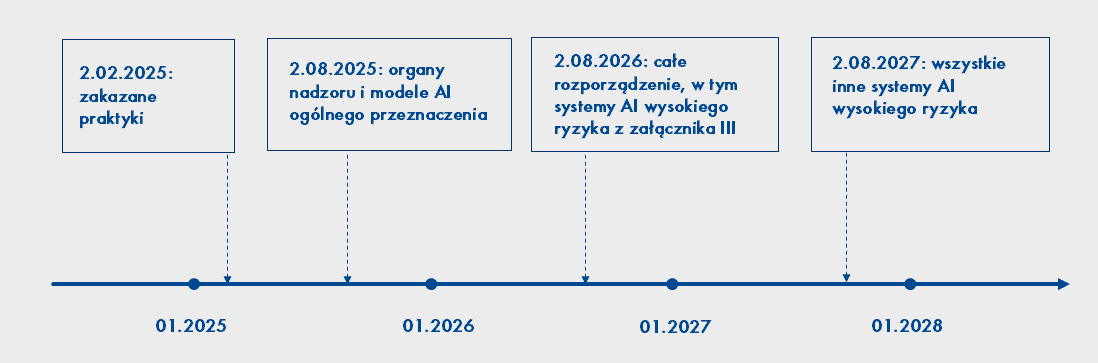
Source: https://codozasady.pl/p/ai-act-i-nowe-obowiazki-dla-podmiotow-rozwijajacych-i-wykorzystujacych-sztuczna-inteligencje-
How does the EU plan to classify AI systems?
The AI Act divides AI systems into 4 categories based on their risk level:
- Unacceptable risk – zakazane są na przykład systemy punktacji społecznej czy zdalna identyfikacja biometryczna w czasie rzeczywistym na potrzeby ochrony porządku publicznego w przestrzeni publicznej.
- High risk – jako wysoce niebezpieczne systemy sztucznej inteligencji wskazane są te wykorzystywane w chirurgii wspomaganej robotami, oprogramowaniu służącym do sortowania CV czy systemach identyfikacji biometrycznej.
- Ryzyko związane z przejrzystością – relates, among other things, to content created by generative artificial intelligence, which, according to the AI Act, should be clearly labeled.
- Minimal or no risk – zdecydowana większość przypadków użycia systemów sztucznej inteligencji w UE kwalifikuje się do tej kategorii, AI Act nie wprowadza tutaj żadnych nowych przepisów.
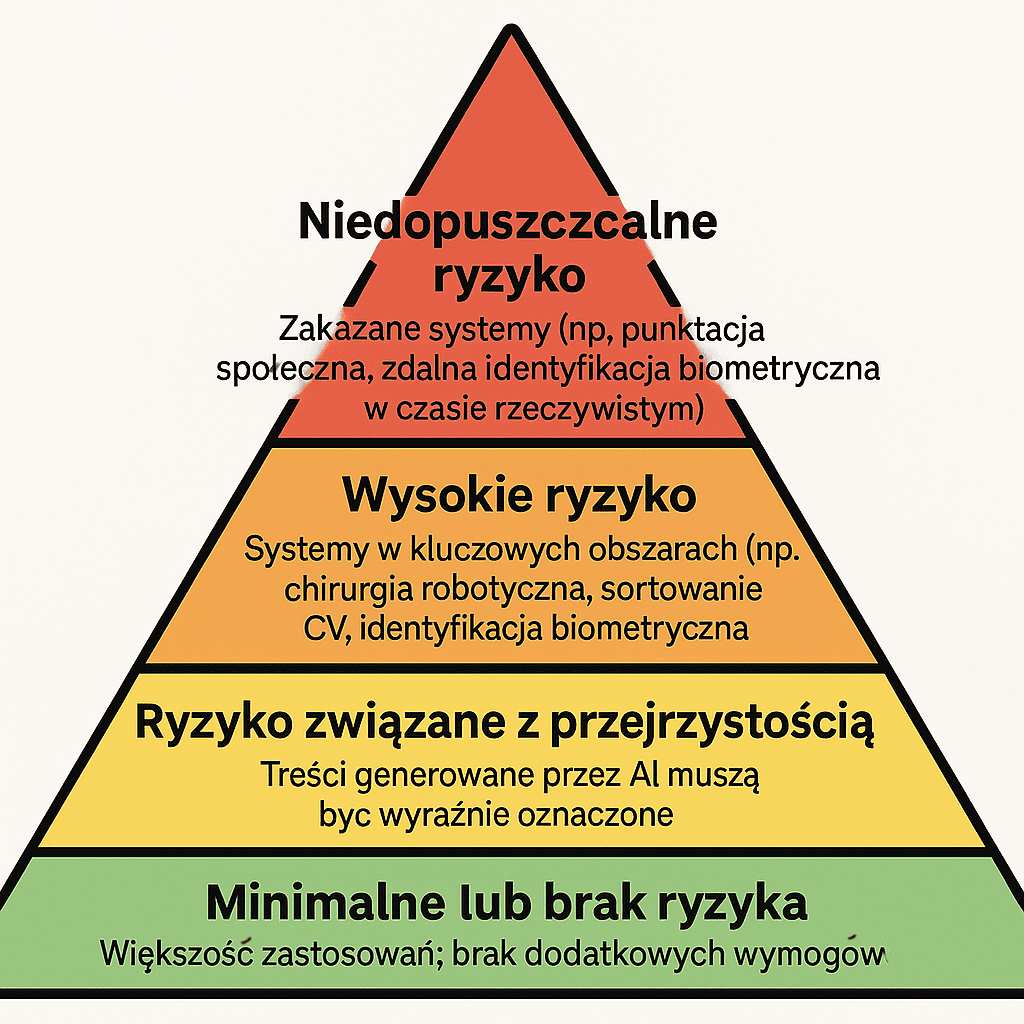
Taki podział został wprowadzony, by ułatwić firmom dostosowanie się do regulacji poszczególnych branż, a także, by umożliwić sprawny monitoring działania systemów AI oraz regulacji w poszczególnych kategoriach.
Zasady odpowiedzialności i nadzoru nad AI
Celem UE przy tworzeniu AI Act było wprowadzenie ludzkiego nadzoru nad pracą systemów wykorzystujących sztuczną inteligencję, aby zapobiegać jej szkodliwym skutkom, takim jak szerzenie dezinformacji czy nadmierne użycie danych wrażliwych. W trakcie wdrażania całego aktu jego wpływ na rynek oraz efektywność będą oceniane przez Komisję Europejską. Suppliers of high-risk artificial intelligence systems are required to prepare detailed technical documentation, which must be kept for at least 10 years to allow bodies to monitor the system's operation.
Parlament Europejski powołał również specjalną grupę roboczą odpowiedzialną za nadzorowanie egzekwowania Aktu o Sztucznej Inteligencji. Od tego, jaką ocenę zgodności systemów z nowymi przepisami wystawią posłowie, zależy dalsze wdrażanie AI Act oraz przyszłość sztucznej inteligencji w Europie.
Wpływ regulacji AI na innowacyjność i konkurencyjność europejskich firm
AI Act ma duży wpływ na europejskie firmy, jak i na przyszłość sztucznej inteligencji. Wprowadzenie jasnych zasad dotyczących sztucznej inteligencji ma na celu zwiększenie do niej zaufania, przyciągać więcej konsumentów oraz inwestorów. Dla przykładu, monitoring działania systemów oraz konieczność utrzymywania dokumentacji może pozytywnie wpłynąć na jakość dostarczanych na rynku usług. Do tego, regulacje dotyczące sztucznej inteligencji są w stanie potencjalnie wywrzeć pozytywny wpływ na innowacyjność firm i tworzenie nowych rozwiązań. AI Act ma zatem szansę pozwolić europejskim przedsiębiorcom na stworzenie odpowiedzialnej sztucznej inteligencji i zdobycia przewagi nad konkurentami.
Z drugiej strony, zakazy dotyczące sztucznej inteligencji mogą być wyzwaniem dla europejskich firm na rynkach globalnych. Additional regulations, restrictions on high-risk artificial intelligence, and the need to monitor system operations could lead to an exodus of technology companies. to other countries, mainly to the United States.
AI regulations also affect your company!
Obecnie prawie wszystkie firmy w Polsce w jakiś sposób wykorzystują sztuczną inteligencję, a lepsze jej zrozumienie pozwala na wyprzedzenie konkurencji. Dokładnie tak samo jest z orientacją w ciągle zmieniających się regulacjach prawnych dotyczących AI, twoja firma może nie tylko nie zyskiwać, ale również tracić przez niedostosowanie się do unijnych norm. As ConQuest Consulting we will advise twojej firmie we wdrażaniu nowych rozwiązań związanych z AI.
Roland Wiadrowski
See other entries